


Have you ever wondered about SAP and how it works? If you’re new to the world of enterprise software, understanding SAP can be a daunting task.
But don’t worry, in this blog we will cover all the fundamentals of SAP, its services and how it can benefit your organization.
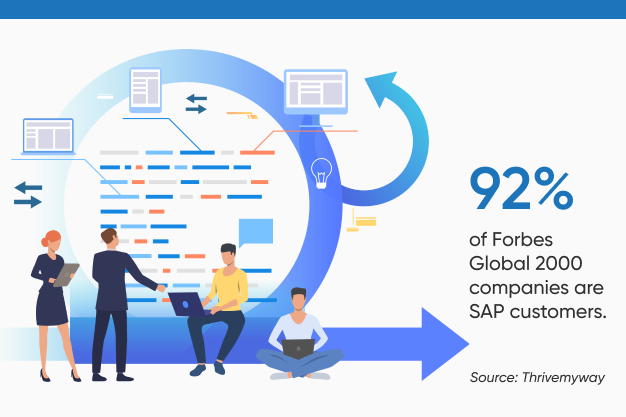
SAP stands for Systems, Applications, and Products in Data Processing. It is an independent, multinational software corporation that distributes enterprise software to organizations of all sizes. Founded back in the year 1972, SAP has grown over the years to become one of the largest and most successful software companies in the world. It is one of the most talked-about names in the enterprise software industry, operating in more than 180 countries.
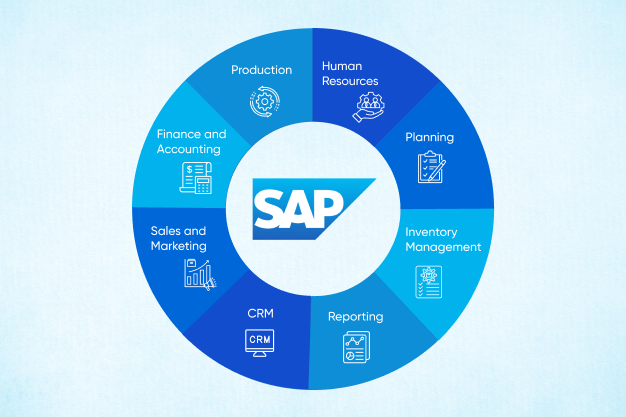
SAP specializes in developing software solutions that help businesses in managing their operations, customer relationships, and supply chains. Their software solution supports a spectrum of business tasks, which includes:
SAP FICO: This system combines finance (FI) and control (CO) modules, each with a specific function. The FI division handles financial accounting and reporting, while the CO focuses on expenditure management and budgeting. Together, they help businesses with budgeting and analysis, allowing them to make smarter investment decisions.
SAP Financial Supply Chain Management (FSCM): This module backs and improves all steps in the financial value chain, from picking suppliers and customers to processing payments and creating reports. Businesses see quick gains in cash flow and working capital.
SAP Material Management (MM): As an integral part of an ERP system, this module is responsible for the purchasing process and supply chain management. It streamlines inventory management, enabling businesses to plan, procure, store, track and manage resources more efficiently.
SAP Sales and Distribution (SD): This important module supports sales and the distribution of goods and services, and covers the entire process from customer inquiry to ordering and delivery.
SAP Logistics Execution (LE): Divided into two main areas – logistics (from purchase to delivery) and warehouse management – this module streamlines sales, distribution, logistics, and manufacturing operations.
SAP Production Planning (PP): SAP Production Planning plays a key role in ERP systems. It handles operations planning, including capacity and material planning. This module also manages production order execution bill of material, and product transport.
SAP Quality Management (QM): SAP QM is a vital part of many important SAP business activities. These include production, sales, procurement, and material management. It helps companies cut down on mistakes, put quality control methods into action, and keep making their business processes better.
SAP Plant Maintenance (PM): This tool oversees all upkeep tasks in a company. It covers key jobs such as inspections, alerts upkeep to prevent and fix issues, repairs, and other work to keep the technical system running.
SAP Project System (PS): The SAP Project System (PS) helps in handling every step of a project’s life starting from setup, moving on to planning and carrying it out, and wrapping things up.
SAP Customer Relationship Management (CRM): With focus on customer-centric approaches, it centralizes customer data to improve overall customer relationship management.
SAP Human Resources (HR): SAP Human Capital Management (SAP HCM) helps in automating record-keeping activities. It is an excellent foundation for the HR department to use for administration and payroll papers.
The software uses one central database to hold and process data from a company’s many corporate functions. It allows access and sharing of data across departments of an organization with one clear picture of an organization.
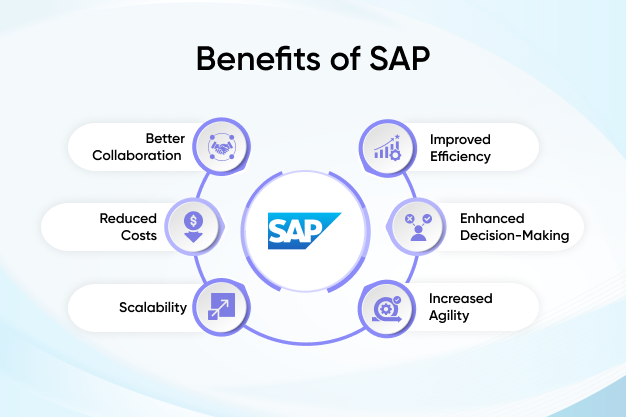
Let’s discuss some of the benefits that you get by utilizing the software with the help of a digital transformation company:
If you have ever thought of deploying SAP software, it becomes very critical that you choose the correct SAP services provider. Here are some variables that you need to keep in mind.
Any software in the SAP category requires meticulous planning and execution. Here are a few things we do before implementing SAP:
SAP is a very powerful business software system that assists in enterprise operation management, customer relationship management, and supply chain management. Understanding what the system is, the services it offers, and how it works can greatly help businesses make the right decisions in using the software according to their unique business needs. Furthermore, by selecting the correct SAP service provider, organizations can ensure a successful deployment that fulfils their individual business requirements.

Leave a Reply